
Methodological Abstract
Artificial Intelligence as an Analytical Lens on Social Order
EX and CX Data Landscapes — Observatories of Human Society in Action
HSOS develops a methodological framework for analyzing social order through artificial intelligence used explicitly as an analytical lens rather than a decision-making or governance instrument. The project is grounded in the assumption that contemporary social order has not fundamentally changed, but that the analytical means for observing social relations have expanded.
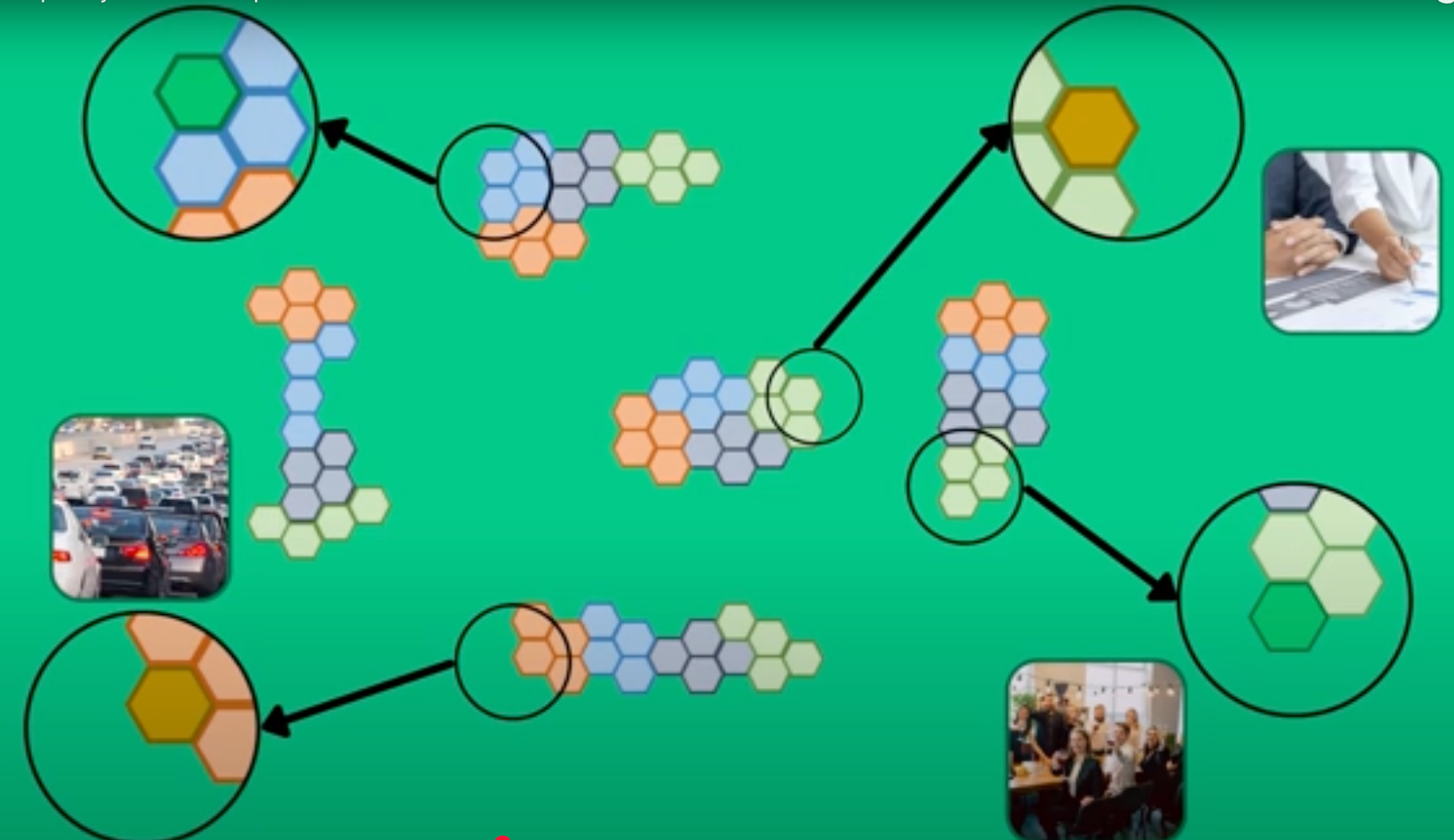
Methodologically, HSOS treats customer experience (CX) and employee experience (EX) data as longitudinal data landscapes that capture repeated, situated observations of social interaction under varying organizational and environmental conditions. Rather than interpreting these data as attitudinal indicators or performance metrics, HSOS conceptualizes them as empirical traces of coordination, expectation, trust, power asymmetry, and adaptation within organized social settings.
AI-supported methods—including clustering, pattern detection, and temporal comparison—are applied strictly at the collective level to identify emergent group formations, relational distances, and coupling effects between internal (EX) and external (CX) social domains. Individual profiling, automated decision-making, and normative classification are explicitly excluded.
A core methodological principle of HSOS is the strict separation of observation and governance. AI enhances comparability, longitudinal visibility, and structural insight, while interpretation, judgment, and intervention remain human responsibilities. In this sense, HSOS positions CX and EX data landscapes as observatories of human society in action, expanding the methodological repertoire of sociology, social anthropology, and experience research without compromising ethical or scientific boundaries.